

We all want to be breathing fresh, clean, and smooth air, especially at home. And as you can imagine, with all the things that are inside a home, dust and debris can go around the room in an instant. So, how do we keep the air inside the house clean and fresh? Below are our maintenance tips to help maintain good indoor air quality, making the room comfortable and your family healthier.
Why Indoor Air Quality Matters
The Health Impact of Poor Indoor Air Quality
What does a poor indoor quality really mean? It generally means the air you’re breathing contains high levels of pollutants and contaminants, which can negatively impact your short-term and long-term health. Poor indoor air quality can be caused by many factors, such as the combination of particular matter like smoke and pet dander, with insufficient ventilation.
Exposure to poor indoor air quality can lead to various health concerns, such as eye and throat irritation, respiratory issues like coughing and wheezing, worsening of pre-existing conditions like asthma attacks, and long-term serious health effects like respiratory diseases and even cancer.
How Your HVAC System Influences Air Quality
Besides cooling and heating, the HVAC system also maintains good indoor air quality by controlling humidity levels and filtering and ventilating the air. For instance, the filters on air conditioning traps pollutants, and ventilation brings in outdoor air, dilutes CO₂, VOCs, and indoor pollutants. It’s crucial to regularly maintain your HVAC system, as it helps keep all components, such as the filters, clean and functioning as intended. Failing to maintain your HVAC system will worsen indoor air quality.
Essential Maintenance Tips for Better Indoor Air Quality
Change Your Air Filters Regularly
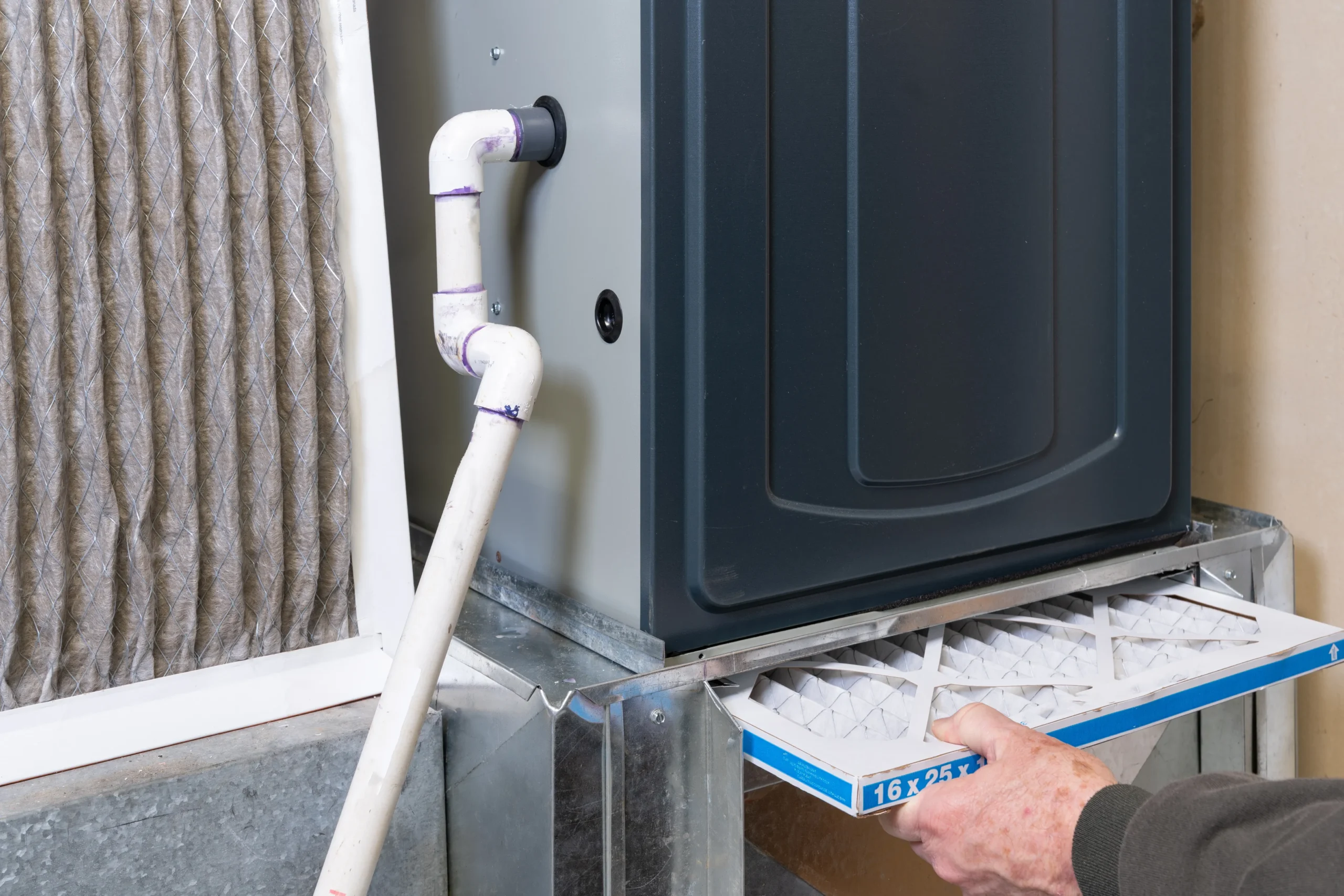
Changing your air filters routinely is crucial for maintaining excellent indoor air quality. As mentioned earlier, filters trap dust, pollen, and even bacteria and viruses. Now imagine if your filters aren’t changed over time: they’ll fill up with all these contaminants, creating more problems than solutions inside your home.
We recommend changing your filters every 3 months for standard HVAC air filters and 6 to 12 months for thicker (4 to 5-inch) filters.
Clean and Maintain Your Air Ducts
Air ducts also play an essential role in delivering filtered air evenly. Dirty or leaky air ducts, on the other hand, can pull in pollutants and spread throughout the room. Inspect your air ducts and have them professionally cleaned every 5 – 10 years or 3 -5 years if you have a pet. If you’ve just moved into a previously occupied home, it’s a smart idea to have it cleaned as well to make sure.
Keep Your HVAC System Clean
Keeping your HVAC system clean is paramount for cleaner air and creating a more comfortable living space. A dirty HVAC system recirculates dust, mold, and bacteria. Clean and replace air filters, and schedule the pros for inspection to ensure your HVAC stays in good condition and continues to deliver on all your heating and cooling needs.
Control Humidity Levels
The ideal humidity levels help keep things at bay. Too high can lead to mold and bacteria growth, and too low can cause sinus issues and dry skin. The ideal humidity level in your home is around 30–50% (max 60% in summer). At this level, you’ll have a cleaner, cozier space to be in. Use a hygrometer to monitor and check humidity levels.
Use Air Purifiers and Air Cleaners
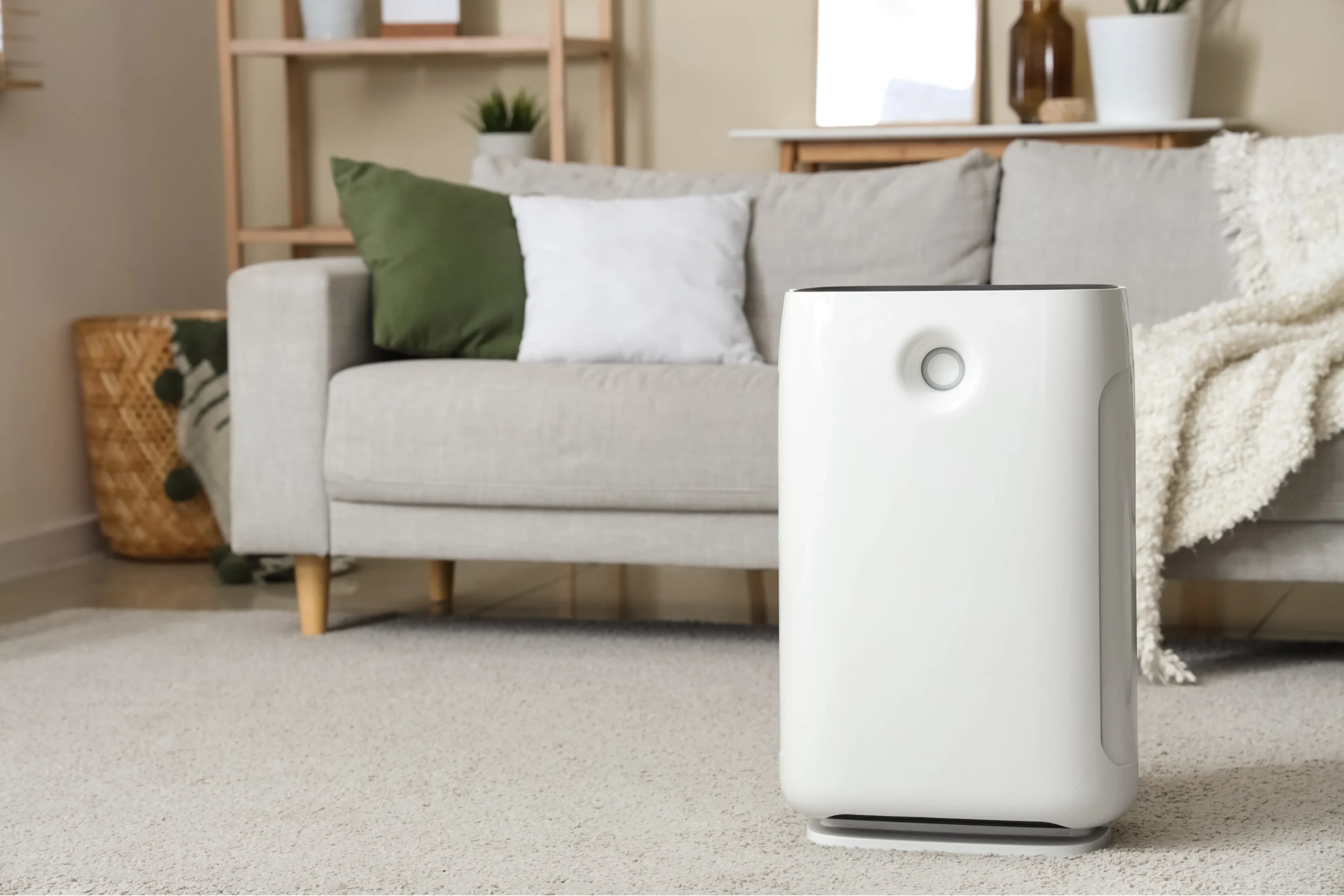 As the name suggests, these tools are effective at purifying and cleaning the air in your home. They work by pulling air through specialized filters or technologies that trap or neutralize pollutants. For example, a HEPA filter system can remove around 99.97% of particles.
Choose purifiers and cleaners suitable for the room’s size for effectiveness. For instance, a 200–400 sq ft space would require a minimum CADR of 200–300.
Improve Ventilation Throughout Your Home
Ventilation helps remove stale air and bring in fresh outdoor air. You want to let the air flow within the house to help replace moisture and other odors with fresh air. Apply simple habits, such as opening up doors and windows on opposite sides for 10 – 15 minutes each day. Of course, you want to do so when the outdoor air quality isn’t at dangerous levels (e.g, <50 AQI). An exhaust fan is also a good idea to help ventilate the space.
Keep Indoor Pollutants Under Control
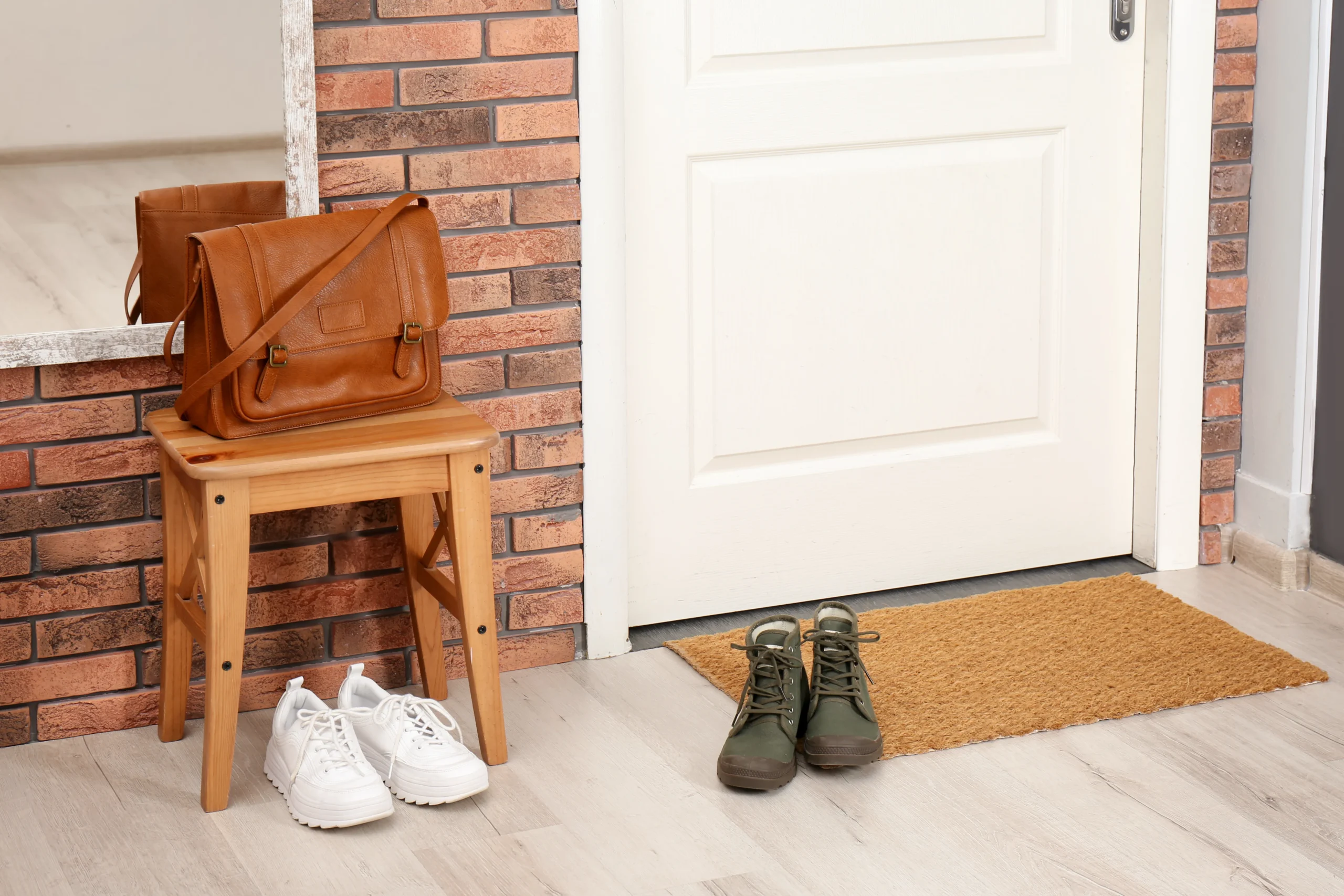 Control indoor pollutants by preventing them from entering or spreading.
Some simple steps you can do are removing shoes at the door, storing chemicals (paint, solvents, etc) in sealed cabinets or garage, regularly vacuuming with a sealed HEPA vacuum, damp-mopping hard floors, washing beddings in hot water to kill dust mites, and running a range hood or opening a window while cooking, especially with gas stoves.
If you have pets, groom them regularly and keep them off furniture and beds.
Seasonal Indoor Air Quality Tips
Spring and Summer Maintenance
The seasons of spring and summer pose challenges with humidity and allergens. This is because during these times, tree, grass, and weed pollen peaks, plus the warm weather, increase humidity levels, which create an ideal breeding ground for mold. Therefore, you want to focus on controlling humidity with a dehumidifier and an AC, and keeping your filters clean to remove dust and pollen effectively.
Fall and Winter Maintenance
As the climate becomes milder, you will use your heating system more often. This can result in the recirculation of dust, dander, and viruses. Upgrade to MERV 13 or a thick 4–5″ media filter to trap these particles. You also want to keep moisture at bay, as the cold can bring in viruses that thrive in a moist environment. Use a whole-home humidifier to help control moisture inside your home.
When To Call a Professional
Professional assistance is required for complex issues, such as repairing air ducts and inspecting electrical components, and is extremely helpful when you’re unsure how to solve them and want the best results. While many of our maintenance tips can be done yourself, calling a professional is still the best way to address the problem, as experts have the necessary skills, experience, and tools to get the job done safely and effectively.
Conclusion
Maintaining excellent indoor air quality in your home doesn’t have to be hard, especially if you combine all the maintenance tips we’ve provided. By following all the steps we’ve shared, you and your family can enjoy a comfortable and healthy time at home!
Just remember: whenever you’re in doubt, call in the pros. And when you need the required regular inspection of the whole HVAC system, expert assistance is the way to go.
Don’t look any further — contact Johnson’s Heating for all your cooling and heating needs. Our team will be more than happy to assist you in creating a comfortable and homey living space!

Recent Comments